Understanding return to player (RTP) helps Canadian adults read a slot’s information screen without confusing a long-term statistical estimate with a promise for the next spin. The original game’s published settings can vary between operators, so the figure shown in the loaded version matters most. This guide explains how to interpret that number, where it fits alongside volatility and features, and which account settings can affect how you manage play. For a closer look at the game and its available information, visit sweet bonanza.

What does RTP actually measure?
RTP is a theoretical percentage describing the amount a slot would return over a very large number of spins under a particular configuration. If a version has an RTP of 96.50%, its mathematical model is designed to return about $96.50 for every $100 wagered across an enormous sample, with the remaining difference representing the house edge. It does not mean that an individual player receives 96.50% of their stake back.
The timescale is important. A player may win more than the theoretical return during one session, lose the entire session balance, or experience results somewhere between those outcomes. Short-term results are shaped by random number generation, the symbols that land and the sequence of tumbles. RTP becomes meaningful only when considering a very large volume of play, not when judging one spin or a brief visit.
RTP also describes the game’s mathematical design, not the quality of a particular result. It cannot identify when a feature is “due”, predict the next multiplier or show whether a session will finish ahead. Treating the figure as a forecast can encourage larger stakes or longer sessions based on a misunderstanding. A more accurate interpretation is that RTP compares configured games over time; it does not remove uncertainty from gambling.
Which RTP figure applies to the loaded version?
Published information for the original game commonly places RTP configurations around 96.48% to 96.51%. That range should not be treated as one universal setting. Operators may enable different versions, and the game’s information panel is the most relevant source for the specific version displayed in the casino. The figure can therefore differ from a number found in a general game description or older provider material.
Open the in-game information or rules screen before wagering and look for the RTP entry. Check that you are viewing the original title rather than a similarly named later release, because separate versions can have different mathematics, features and maximum-win descriptions. The title alone is not enough to establish which configuration is active.
RTP can also be affected by optional game modes. The documented Ante Bet option increases the stake by 25% and is intended to improve the chance of triggering Free Spins naturally, while disabling Bonus Buy. That changes the cost and feature access rather than automatically making the overall experience more favourable. Read the displayed terms for the loaded version and do not assume that a higher feature frequency means a higher RTP.
Why volatility matters alongside RTP
RTP does not describe how frequently wins arrive or how large they may be. Volatility, sometimes called variance, is the separate concept used to describe the distribution of results. A higher-volatility slot may produce fewer winning outcomes but offer greater variation when features or larger combinations occur. A lower-volatility design may produce smaller results more often, although neither description guarantees a particular session pattern.
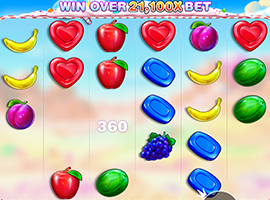
The Tumble mechanic can make individual spins appear active because one paid spin may contain several consecutive winning combinations. Matching symbols disappear, new symbols fall into place and additional wins can follow. Those wins are still part of the same mathematical game; repeated movement on the screen does not mean the spin has become more likely to pay than an ordinary result.
Free Spins add another source of variation. Four or more Scatter symbols trigger the feature in the original rules, which normally begins with 10 spins. During the feature, multiplier bombs from 2x to 100x may appear, and values from one tumble sequence are added before being applied to that sequence’s win. These mechanics can produce a wide range of outcomes, but they do not turn a high multiplier into an expected result.
How should optional features affect your calculation?
Bonus Buy, where available, is not part of every operator’s offering or every regulated market. In the documented configuration, it costs 100 times the selected base bet to purchase the 10-spin feature. That price should be considered separately from the displayed base-game RTP and from any casino promotion. A purchased feature can produce a win or a loss; it is not a guaranteed-value transaction.
Ante Bet also changes the amount placed on each spin. If the standard stake is $1, a 25% increase would make the wager $1.25, but the applicable currency, denomination and exact setting are controlled by the operator. The feature’s stated purpose is to add Scatter symbols and increase the natural chance of entering Free Spins. It does not justify assuming that each spin has a better expected cash outcome.
Promotional free spins and casino bonuses should be kept separate from the slot’s built-in features. Wagering requirements, maximum-bet rules, expiry dates and contribution rates belong to the operator’s promotion terms, not to the game’s standard RTP explanation. Before accepting an offer, read how the bonus changes withdrawal conditions. If the terms are unclear, ask the operator for the applicable requirements rather than relying on a general description.
What account settings can help you read RTP responsibly?
RTP is useful only when paired with control over the amount and duration of play. The casino hosting the game may offer deposit limits, loss limits, session reminders, cooling-off options or self-exclusion, but these are operator-level tools rather than features of the slot itself. Availability can depend on the operator and the rules that apply in the player’s province.
Autoplay, when included in the operator’s version, deserves particular caution. Possible stop conditions may include a selected win, a feature trigger, a balance increase or decrease, or a specified result amount. These settings can automate decisions, but they do not improve RTP or reduce volatility. Set a clear spending and time limit before starting, and avoid treating an automated run as a way to recover earlier losses.
Keep records based on actual account activity rather than impressions created by animations or feature frequency. The game may provide recent game history, while longer session and transaction records are managed by the casino. If the loaded RTP, stake range or game rules are not visible, pause before playing and contact the operator. A transparent information screen is more useful than an assumed percentage copied from another site.
Sweet Bonanza RTP questions answered
Is a 96.50% RTP a guarantee of receiving 96.50% back?
No. RTP is a long-term theoretical average, not a session guarantee. A player can lose quickly, win substantially or finish near the stated percentage. Random outcomes create short-term variation, while the published figure becomes meaningful only across a very large number of spins under the same configuration.
Can the RTP be different at another casino?

Yes. Pragmatic Play has published several RTP configurations for the original game, and an operator may enable one version rather than another. Always open the loaded game’s information screen and check its displayed RTP. Do not assume that a figure from another casino, review or older rules page applies.
Does Bonus Buy provide better value than regular spins?
Not automatically. Bonus Buy changes how the Free Spins feature is accessed and, where offered, may cost 100 times the base bet. It does not remove randomness or guarantee a profit. Compare the displayed rules, price and your own spending limit before considering the option, and remember it may be unavailable.